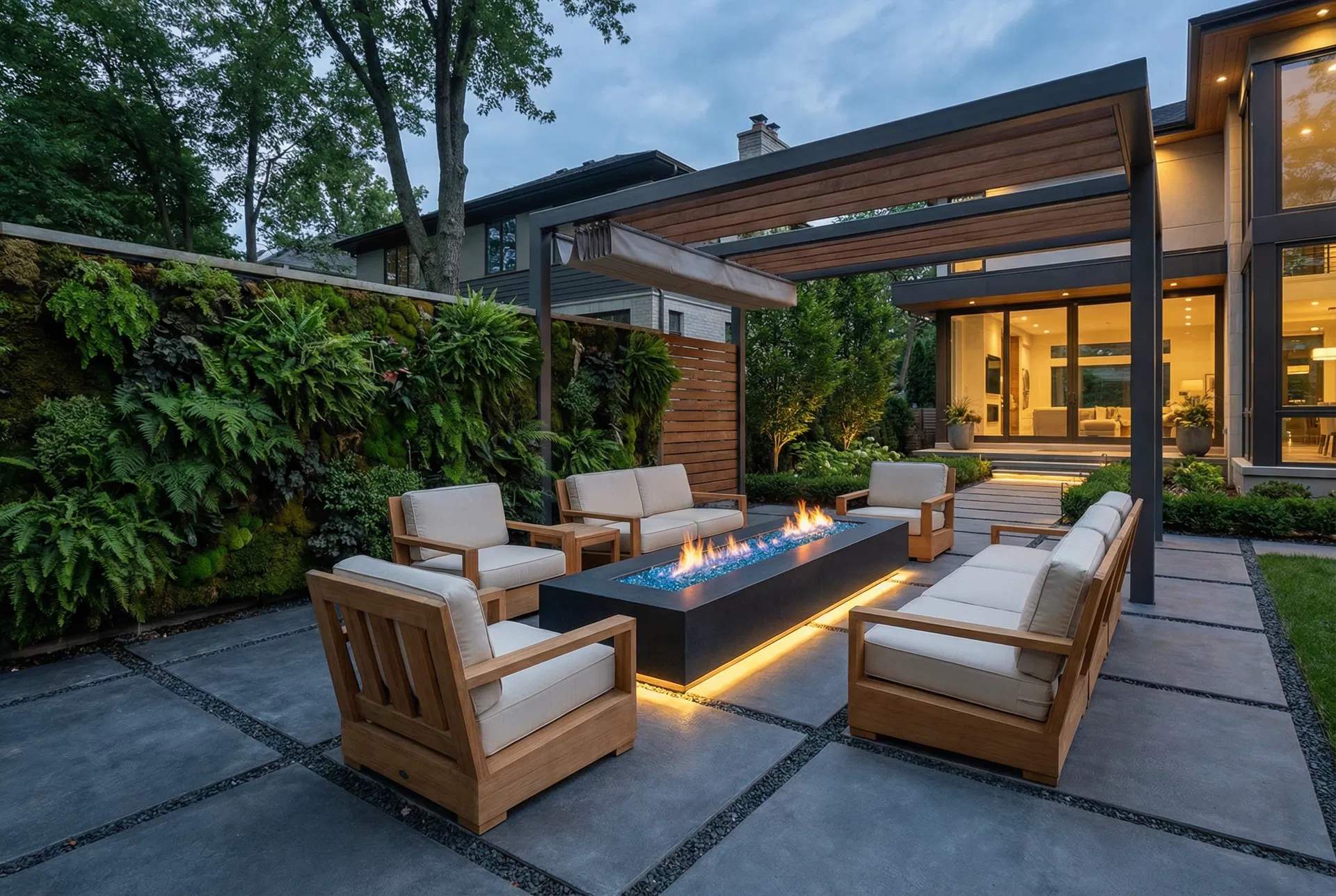
Chicago winters are brutal. Here's how we design and build outdoor kitchens that survive freeze-thaw cycles, look incredible, and perform for decades.
Building an outdoor kitchen in Chicago requires a fundamentally different approach than in warmer climates. The freeze-thaw cycle is the enemy of poorly designed outdoor structures — and we've seen enough failed installations from other contractors to know exactly what not to do.
Material Selection is Everything
The single most important decision in an outdoor kitchen build is material selection. We exclusively use 316-grade stainless steel for appliances and hardware — not 304, which is standard but insufficient for Chicago winters. For countertops, we recommend either porcelain tile (minimum 20mm thickness) or natural granite with a proper sealer applied annually.
Foundation and Drainage
Every outdoor kitchen we build sits on a properly engineered concrete pad with integrated drainage. Water management is critical — standing water under or around an outdoor kitchen accelerates deterioration and creates safety hazards. We slope all surfaces a minimum of 1/8" per foot toward drainage points.
Appliance Selection for Cold Climates
Not all outdoor appliances are created equal. We specify appliances with stainless steel burner boxes and sealed ignition systems. All gas lines include shutoff valves that are accessible and clearly labeled. For clients who want year-round use, we integrate infrared heaters into the pergola structure above.
The Winterization Protocol
Every Skyline outdoor kitchen client receives a detailed winterization guide. The key steps: drain all water lines, cover stainless surfaces with breathable covers (not plastic), and apply a fresh coat of stainless steel protectant in late October.