
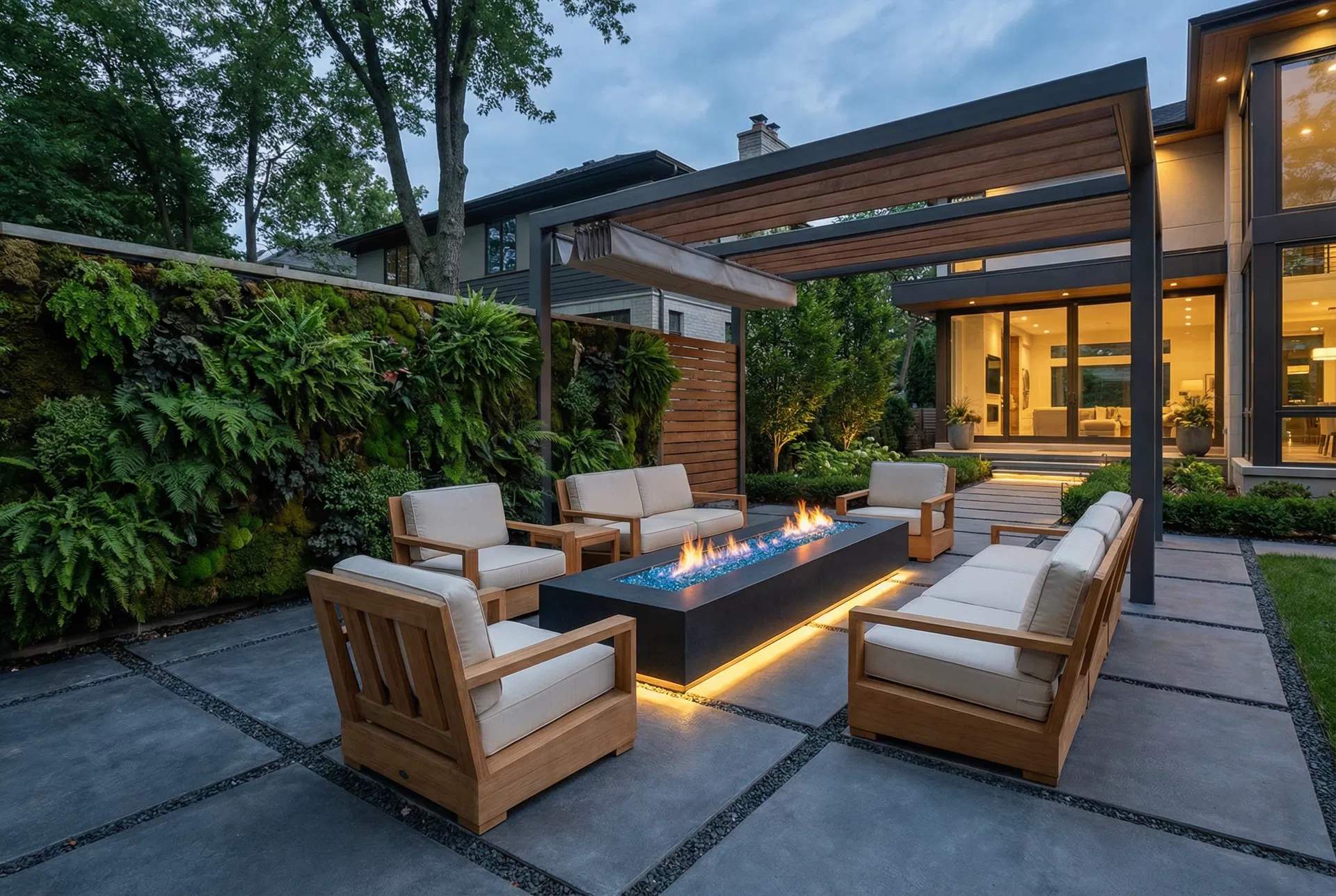
Most outdoor lighting installations are functional at best. Here's how we approach lighting as an architectural element that transforms a property after dark.
Walk through any North Shore neighborhood at night and you'll see two kinds of outdoor lighting: the kind that makes a property look like a parking lot, and the kind that makes you stop and stare. The difference isn't budget — it's design intent.
The Layered Lighting Approach
Great outdoor lighting works in layers, just like interior lighting. We design three layers for every project: ambient (overall illumination), accent (highlighting specific features), and task (functional lighting for pathways, steps, and cooking areas).
Most contractors install only task lighting. We start with the accent layer — the lighting that creates drama — and build the other layers around it.
Uplighting: The Most Impactful Technique
Uplighting specimen trees is the single highest-impact lighting technique available. A well-placed uplight on a mature oak or Japanese maple creates a dramatic focal point that defines the nighttime character of a property. The key is fixture placement — too close to the trunk and you get a harsh, unnatural look; too far and you lose the drama.
Color Temperature Matters Enormously
We specify 2700K-3000K color temperature for all residential landscape lighting. This warm white range is flattering to plant material and creates an inviting atmosphere. The 4000K+ "cool white" fixtures common in commercial applications look sterile and institutional in a residential context.
The Low-Voltage LED Advantage
All of our lighting installations use low-voltage LED systems. The energy savings are significant — a typical landscape lighting system draws 80-90% less power than the halogen systems it replaces. More importantly, LED fixtures have dramatically longer lifespans and more consistent color output over time.